You do not need a gym membership or a room full of equipment to get stronger. Your own body weight provides plenty of resistance when you are starting out, and a short routine done two or three times a week can make everyday movements feel easier.
Below is a straightforward beginner bodyweight workout you can do in a living room or bedroom, with clear instructions, easier and harder versions of each move, and guidance on how to build it into your week.
What You Need
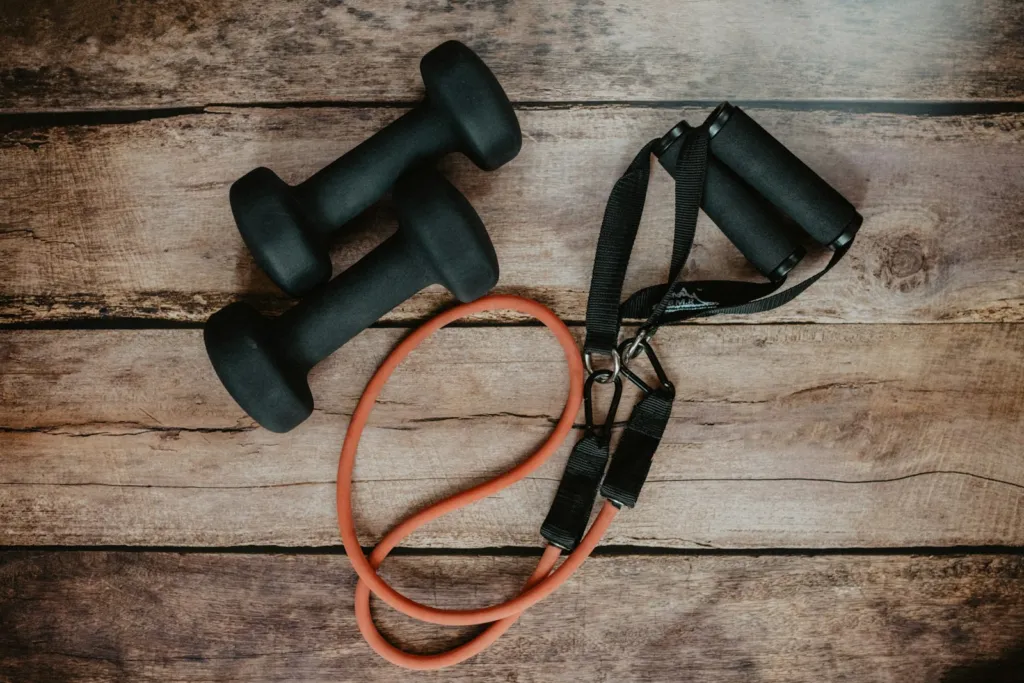
Very little. Clear a space roughly the length of your body, wear comfortable clothes and supportive shoes or go barefoot on a non-slip surface. A sturdy chair, a wall and a mat or towel for floor exercises are all useful. Dumbbells and resistance bands are optional extras for later.
Warm Up First
Spend five minutes getting warm before the main workout. March on the spot, roll your shoulders, swing your arms gently, and do a few slow half-squats. The aim is to raise your temperature and loosen your joints, not to tire yourself out.
The Six-Move Routine
Do each exercise for 8–12 controlled repetitions, rest for about a minute, then move to the next. When you have finished all six, that is one round. Beginners can stop after one round and build up to two or three over the coming weeks.
- Chair squat. Stand in front of a chair with feet hip-width apart. Sit back slowly until you lightly touch the seat, then stand up by pushing through your heels. Harder: squat without touching the chair.
- Wall push-up. Place your hands on a wall at shoulder height, step your feet back and lower your chest towards the wall, then push away. Harder: use a kitchen worktop, then progress to knee push-ups on the floor.
- Glute bridge. Lie on your back with knees bent and feet flat. Squeeze your glutes and lift your hips until your body forms a straight line from shoulders to knees, then lower with control.
- Standing calf raise. Hold a wall or chair for balance, rise onto the balls of your feet, pause, then lower slowly.
- Bird dog. Start on hands and knees. Reach one arm forward and the opposite leg back, keeping your back flat, then switch sides. Move slowly; this is about control, not speed.
- Modified plank. Rest on your forearms and knees with your body in a straight line from head to knees. Hold for 15–20 seconds, breathing normally. Harder: hold a full plank on your toes.
How Often to Train
The NHS recommends that adults do strengthening activities that work all the major muscle groups on at least two days a week. This routine covers the legs, hips, back, chest, shoulders, arms and core, so two or three sessions with a rest day in between is a sensible target.
On the days in between, light movement still helps. A brisk walk is an easy partner for strength work, and our simple beginner walking plan shows how to build one up over four weeks.
A Sample Weekly Schedule
Here is one way to arrange a beginner week. Swap the days around to suit your routine; the important part is leaving a day of rest or light activity between strength sessions.
Monday: one or two rounds of the six-move routine. Tuesday: a brisk walk. Wednesday: rest or gentle stretching. Thursday: the six-move routine again. Friday: a walk or another light activity you enjoy. Saturday: an optional third strength session. Sunday: rest.
Form Tips That Make a Difference
Slow Down
Counting two seconds down and two seconds up keeps your muscles working throughout the movement and makes it harder to cheat with momentum.
Breathe Steadily
Try not to hold your breath. A simple pattern is to breathe out during the effort, such as standing up from a squat, and breathe in as you lower.
Keep It Pain-Free
Muscles may feel tired or mildly sore a day or two later, which is normal when you start something new. Sharp or joint pain is different. If a move hurts, stop, try the easier version or skip it.
How to Progress Over Time
Once 12 repetitions of a move feel comfortable with good form, it is time for a small change. You can add a second or third round, switch to the harder version, slow the tempo further, or reduce your rest between exercises. Change one thing at a time so you can tell what is working.
Keeping a quick note of what you did each session, even just the date and number of rounds, makes progress easier to see and can be surprisingly motivating.
Cool Down
Finish with a few minutes of easy movement and gentle stretches for your thighs, calves, chest and back. Hold each stretch without bouncing and breathe slowly.
This article is general information, not medical advice. If you have an injury, a health condition or are pregnant, talk to a qualified professional, such as a doctor or physiotherapist, before starting a new workout.
You can find more beginner-friendly routines in our fitness section, and more everyday how-to guides on Rashywings.com.
Common Questions About Home Workouts
How long should a beginner bodyweight workout take?
Including a warm-up and cool-down, one round of this routine takes around 15–20 minutes. As you add rounds, it may take 30 minutes or so. Short, regular sessions are more useful than occasional long ones.
Can I build strength with bodyweight exercises alone?
Yes, especially as a beginner. Bodyweight moves challenge your muscles, and you can keep progressing by using harder variations, adding rounds or slowing the tempo. Weights or bands can be added later if you want more variety.
Should I work out every day?
Most beginners do well with two or three strength sessions a week and a rest day between them. Rest gives your muscles time to recover. Gentle activity such as walking on the other days is fine.